
Energetics of Rutabagas: Warming in Winter
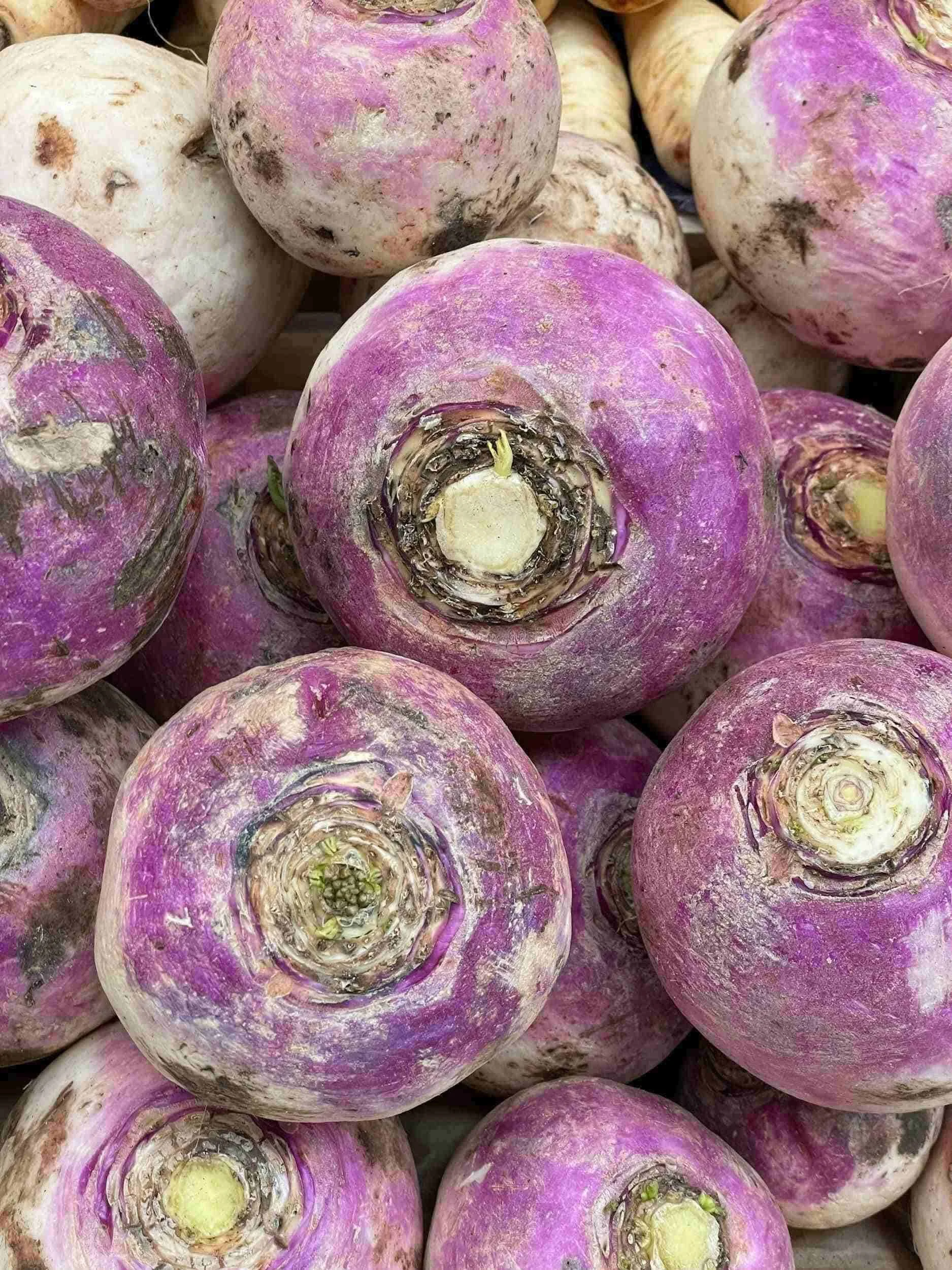
Rutabagas are root vegetables, or “underground” vegetables, like carrots, parsnips, potatoes, and beets. While they are closely related to turnips, their exact origin is vague. It is speculated that they are a cross between turnips and cabbage. They are in season late fall and winter, generally ready to be harvested after the first frost has set in.
Rutabaga has many national and regional names. Rutabaga is the common American and Canadian term for the plant. This comes from the old Swedish word Rotabagge, meaning simply “ram root”. In the U.S., the plant is also known as Swedish turnip or yellow turnip.Rutabagas are also known as “swedes,” as they grew very well in the cold climate of Sweden and surrounding areas.
How to Choose and Store
Ripe rutabaga will usually have purple-tinged skin. If you scratch the skin slightly you should see yellow flesh beneath. Stay away from rutabagas that are bruised or blemished. And toss that rutabaga back if you notice any green shoots coming out of it, which typically means it’s overripe. A ripe rutabaga will also feel firm to the touch. If the flesh is shriveled, loose, or you notice any soft spots, that veggie is past its prime and should be avoided. Rutabagas are a very hardy vegetable. They should last about a week when left out at room temperature or for several weeks if refrigerated.
Don’t bite into that rutabaga as soon as you bring it home! Rutabagas are often sold with a food-grade wax coating on them. This keeps them from drying out while they’re stored during the winter months, but it’s definitely not tasty! Using a paring knife, cut off the top and bottom of the rutabaga so it has a flat surface to stand on and peel off the skin.
As with watercress, mustard greens, turnip, broccoli and horseradish, human perception of bitterness in rutabaga is governed by a gene that affects the TAS2R bitter taste receptor. Thus, sensitive individuals may find rutabaga so bitter that it is inedible.
Nutrition

Long ago, rutabagas were fed solely to livestock and were considered “unfit” for human consumption. Ironically, rutabagas are incredibly healthy for us! They are high in fiber, potassium, iron, and vitamins A and C.
Rutabaga and other cyanoglucoside-containing foods (including cassava, corn, bamboo shoots, sweet potatoes, and lima beans) release cyanide, which is subsequently detoxified into thiocyanate. Thiocyanate inhibits thyroid iodide transport. As such, foodstuffs containing thiocyanate, like rutabagas, are best avoided by hypothyroid patients.
Energetics
Rutabagas benefit that the spleen-pancreas and stomach, helps clear liver and gallbladder obstructions, promotes perspiration, mildly diuretic, lubricates the intestines, reduces wind and damp conditions, and work as an analgesic (allays pain). Used in soup to treat coughs, colds, and shortness of breath. Rutabagas treat headaches, dizziness, rheumatism, and arthritis.
Mashed Potato, Rutabaga, and Parsnip Casserole with Caramelized Onions
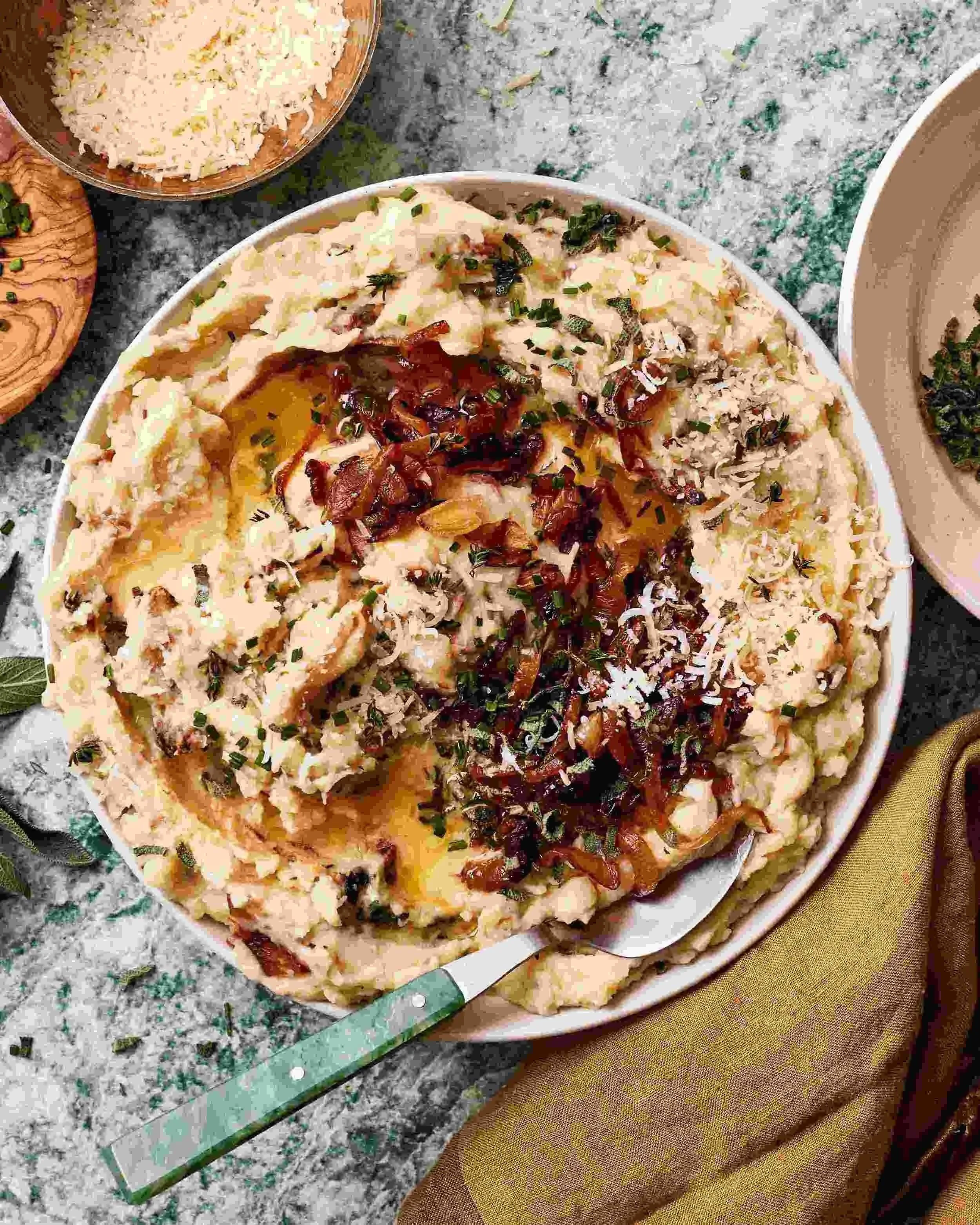
Gluten-free and grain-free with vegetarian and vegan option.
Makes 8 to 10 servings
Ingredients
7 cups low-sodium chicken broth (substitute vegetable broth for vegan option)
3 pounds russet potatoes, peeled and cubed
1 1/2 pounds rutabagas, peeled and cubed
1 1/4 pounds parsnips, peeled and cubed
8 cloves of garlic
1 bay leaf
1 teaspoon thyme
3/4 cup butter or margarine
3 onions, thinly sliced
salt and ground black pepper to taste
Directions
Butter 13 x 9x2-inch glass baking dish. Combine first 7 ingredients in large pot; bring to boil. Reduce heat, cover partially and simmer until vegetables are very tender, about 30 minutes. Drain well. Transfer vegetables to large bowl. Add 1/2 cup butter. Using electric mixer, beat mixture until mashed but still chunky. Season with salt and pepper. Transfer mashed vegetables to prepared dish.
Melt remaining 1/4 cup butter in heavy large skillet over medium-high heat. Add sliced onions and sauté until beginning to brown, about 5 minutes. Reduce heat to medium-low and sauté until onions are tender and golden brown, about 15 minutes. Season with salt and pepper. Spread onions evenly over mashed vegetables. (Casserole can be prepared up to 1 day ahead. Cover and refrigerate.)
Preheat oven to 375 degrees F. Bake uncovered for 25 minutes or until heated through and top begins to crisp.
Sources
Mashed Potato, Rutabaga, and Parsnip Casserole with Caramelized Onions